
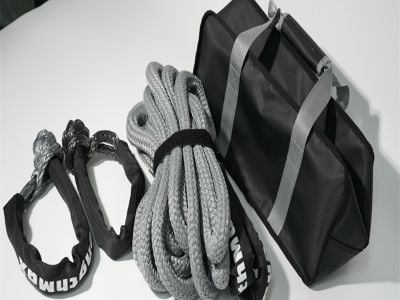
HMPE lifting ropes are helping transform the way ships are docked and moored. These ropes are made from a unique material called High Modulus Polyethylene (HMPE), which is extremely strong and very light. Companies like Jinli are leading the way in manufacturing these ropes, making them the new standard for mooring and berthing ships. These unique properties are superior to the traditional ropes that have been used for a long time and will make docking much safer and more efficient for ships around the world.
How HMPE Lifting Rope Outperforms Traditional Mooring Methods?
Traditionally, ropes made from natural fibers or old synthetic materials have been used for mooring. However, natural fibers and old synthetic ropes can often be heavy, can easily stretch, and have short wear life. Conversely, HMPE lifting ropes are much lighter making them easier to handle, allowing ship crew to handle the mooring of ships with less difficulty as it enters the dock. HMPE ropes will not stretch a lot, thus, it can hold the ship without much give. As a result, the ship will not rock to and from, keeping it from any damage. Take for example the possibility of a big wave hitting the dock, this HMPE rope will still hold the ship better compared to traditional rope.
Another quality of HMPE lifting ropes is its tough outer coating, allowing it to hold large loads without breaking. As ships can be quite heavy, mooring them securely with a high load-carrying rope is essential in preventing accidents. Furthermore, HMPE lifting ropes are made of material that can resists abrasion and therefore can endure wear and tear longer than natural fibers and other synthetic fibers, making them a cost effective investment as companies such as Jinli can supply ropes with a longer wear life to sea operators. The use ofHMPE lifting ropes in marine applications is advantageous due to their resistance to chemicals, water, and UV rays-traditional ropes are known to be degradable in such conditions.
The Essential Features of HMPE Lifting Rope for Use in the Sea
HMPE lifting ropes offer an array of useful qualities which make them ideal for use at sea. The first great quality that sets these HMPE lifting ropes apart from traditional ropes is their lighter weight which make it easier to handle, especially for sailors who often find it tiring to carry and handle heavy mooring ropes. As a matter of fact, it would take one man effort to toss the rope over a cleat or secure it to a mooring bitt without any exertion. The very fact that it is light also makes it easy for any sailors to handle and secure it without much stress or strain of being in the sea. The second advantage that comes from using these HMPE lifting ropes is their superior strength and high breaking strength which allow these ropes to take in high tension without snapping. These HMPE lifting ropes are also less elastic, allowing sailors to keep their boats stable when they are being moored and it will be difficult to knock the boat back and forth from the dock due to waves in the sea. As HMPE lifting ropes are strong and do not have any stretch in the ropes, they offer good resistance to abrasion and UV light which is an added benefit. Their resistance to degradation helps to avoid fraying which can shorten the ropes life. HMPE lifting ropes are also highly flexible; they can be bent, coiled, and twisted into almost any shape that one requires without them losing strength. As they are extremely flexible, these HMPE lifting ropes will reduce the chance of the boat bouncing from the dock and hurting its hull. By offering a multitude of advantageous qualities, the HMPE lifting ropes from Jinli are the industry standard for safe and efficient mooring and berthing.
HMPE Lifting Rope-The Future for Sea Mooring
HMPE lifting rope (also known as high-modulus polyethlene lifting rope) is swiftly becoming the premier choice for docking and berthing ships and boats. Unlike traditional ropes made from fibers such as nylon or polyester, HMPE lifting rope is stronger and lighter by a significant margin. This translates to ropes that can withstand the same weight as, or even more than, normal ropes but can be up to half the weight, making it very important for sea operations where large vessels or equipment must be moored.
One of the major benefits of HMPE lifting rope is its resistance to water. Conventional ropes soak up water, making them heavier over time, and ultimately weakening their material strength. HMPE on the other hand, does not absorb water which allows the rope to retain its strength and light weight. This is extremely useful in wet climates and rough seas where heavy mooring ropes are a real burden, especially in the presence of strong currents or rough water. Besides being resistant to water, the use of HMPE lifting rope in the sea means they will also maintain its properties and last longer even after constant exposure to the elements such as sunlight and harsh chemicals; meaning that money is saved over the long run since ropes will have to be replaced far less frequently. Jinli provides these high quality HMPE lifting ropes that will serve a modern sea operator needs and since it has been stated that the people are already aware of the advantage of this material, it would be impossible to stop the movement from shifting the marine industry toward HMPE lifting ropes-for HMPE lifting rope, it is already the future and the present!
Understanding HMPE Lifting Rope Specifications for Wholesale Buyers
For wholesale buyers considering HMPE lifting rope, it is essential to consider several factors that will determine if the ropes will be an optimal purchase for their needs. The very first feature that should be considered when purchasing HMPE lifting ropes from suppliers such as Jinli is the rope's breaking strength. This measurement allows the buyer to understand how much load the rope can hold before it breaks and is essential when considering heavy operations. It would be smart to ensure that the breaking strength meets the needs of the task without going over the amount of weight required, if possible to keep cost efficiency optimal. The diameter of the HMPE lifting rope is also an important aspect as this will help determine the handling and maneuverability of the rope when in use. While a wider diameter rope will likely be stronger than a thinner one, it will also likely be heavier and harder to maneuver when not required. As a result, the buyer must balance how easy it is to handle versus the strength needed when selecting the diameter of the rope. Length is also a factor that should be considered as HMPE lifting ropes can be acquired at various lengths depending on what the buyer's sea operations require. Buyers will want to ensure that the rope they choose is sufficiently long enough to adequately secure any vessel they intend to moor while not leaving excessive rope length lying on the dock, which may pose a tripping hazard. Finally, buyers should ascertain whether the HMPE lifting ropes they are looking for come with any special properties or coatings designed to further protect the rope, while those of Jinli are made specifically with sea operations in mind. Wholesale buyers who consider all of these specifications should be able to find the optimal HMPE lifting rope for their needs and at the right price.
How HMPE Lifting Rope enhances the safety and efficiency of Sea Operations?
The employment of HMPE lifting rope in sea operations will ensure the highest possible degree of safety and efficiency, as safety is considered of paramount importance to anyone who engages in marine operations or sea activities, and is in itself a defining feature of using HMPE lifting ropes as they are designed to be strong and highly reliable to reduce any instances of rope failure under pressure. As the HMPE lifting ropes from Jinli have been designed to ensure optimum performance and reliability during its use in the sea, operators are assured a greater level of peace of mind. Besides the improvement in safety, it has also been observed that HMPE lifting ropes contribute to improved efficiency in sea operations as these are much lighter compared to traditional ropes. Sailors and workers alike will not only find it easier to handle and maneuver the ropes from one part of the boat to the other, they will also take less time to tie and untie boats and ships and load equipment onto vessels, all of which is of crucial importance especially in crowded ports where time constraints often define work schedules and in addition to being able to do these things much faster, workers would also need the strength to carry these heavier loads while they do it but HMPE lifting ropes reduce that risk dramatically.
Table of Contents
- How HMPE Lifting Rope Outperforms Traditional Mooring Methods?
- The Essential Features of HMPE Lifting Rope for Use in the Sea
- HMPE Lifting Rope-The Future for Sea Mooring
- Understanding HMPE Lifting Rope Specifications for Wholesale Buyers
- How HMPE Lifting Rope enhances the safety and efficiency of Sea Operations?
